

Career & Business Coaching Blog for Creatives & Entrepreneurs.
Inspiration, guidance, and practical strategies for multi-passionate professionals who refuse to choose just one thing.

What Should I Do With My Life? An Honest Answer for Multi-Passionate People
Googling "what should I do with my life" at 2am and getting nowhere? You're not lost, you're asking the wrong question. Here's the honest, multi-passionate answer, and a real 4-step way to actually find your direction.
"What should I do with my life?" isn’t really a question. It's an identity crisis, a mystical expedition, a demand for the entire rest of your existence to resolve itself into one sentence, and it usually shows up at 2 am, or in the shower, or right after a fight with your boss or launch that should have gone much better than it did. You type it into Google like it's a thing you can find, not a life you have to live. Of course, nothing that comes back actually answers it, because the question itself focuses on the wrong thing.
I didn't actually ask myself this question correctly for most of my adult life, I just kept answering it with whatever was already expected of me. I spent 15 years as an entrepreneur in tech, started and grew and sold companies, and from the outside it looked like a real success story. On the inside, I didn't love most of what I was doing. I was exhausted, always on edge, and the moment I hit one milestone I was already onto the next one, judging myself for not doing it better. I was living out other people's dreams I'd never actually chosen for myself.
Then in 2010, my parents died five weeks apart. That kind of loss just stops you in your tracks - full stop. I lost my entire sense of purpose, and for the first time in my life I didn't know who I was or what I wanted, because I'd never had to ask before, life had just kept handing me the next expected thing. What surfaced, uninvited, was the real question underneath all of it: why had I put off doing the things I actually wanted to do for so long, and why was I living a life I didn’t even like?
That question took real work to answer, unlearning old messages about what I was supposed to want, untangling what was actually mine from what I'd just absorbed as expected, and rebuilding from there. I've coached creative generalists and multipotentialites, or really, anyone who's never been able to fit inside one job title, through their own version of this exact question for over 10 years since. The kicker? "What should I do with my life?" won’t give you the answers you’re looking for; it’s simply the wrong question to ask.
Why "What Should I Do With My Life?" Feels Impossible to Answer
It feels impossible because it's built like a single, forever decision, and for multi-passionate people specifically, there isn't one true calling sitting around waiting to be discovered. You're not failing a test that has a right answer. You're trying to solve a life-sized problem with a search-bar-sized question.
A 2026 study in Royal Society Open Science, surveying 462 emerging adults, found that higher future anxiety was consistently linked to greater career decision-making difficulty, across every domain researchers measured, lack of readiness, lack of information, and inconsistent information alike. Psychological courage worked in the opposite direction: people who scored higher on it had meaningfully lower odds of landing in the moderate or high-difficulty groups. The research says career indecision isn't mainly an information problem. It's an anxiety-management problem disguised in an information problem's clothes.
Most advice about what you should do with your life assumes you're missing data: a personality test, a quiz, a list of high-paying jobs. You've probably already tried a few of those. You'll also see the claim floating around that the average person changes careers three to seven times in a lifetime. It gets repeated everywhere, but nobody can actually trace it back to a real dataset, so take it for what it is: a number people find comforting, not a verified fact. What the actual research says, though, is this: your fear about getting it wrong is doing more damage to your decision-making than your lack of options ever could.
You're Not Indecisive. You're Multi-Passionate.
You're probably not struggling to figure out what you should do with your life because you can't find the one thing you’re meant to be doing. But that’s the thing. You're struggling because you're trying to pick one thing when you were never a one-thing person to begin with. If you've never heard the word "multipotentialite," or you've just never been able to pick one lane, this is worth reading first, because it changes how this question lands for you.
My stance on this, after a decade of coaching people through it, is combine, not choose. You don't have to pick the one true calling and abandon everything else. You go deep on something, and either you move on for a while, or you circle back to it later, sometimes both, and that's not a lack of discipline; that's just how a multi-passionate life actually moves. "What should I do with my life?" assumes a single answer. You might without any doubt need three or four, held at once or in sequence.
The Question That Actually Works
Here's the reframe I give clients who bring me this exact question: we go from "what should I do with my life" to "what do I want my life to feel like?" One is the search for a job title. The other is the search for a felt sense you can actually test against real decisions. It's also the question that eventually replaced the old one for me, once I stopped trying to answer it with whatever looked right on paper and started paying attention to what I actually wanted to feel.
This isn't just a nicer-sounding question either, it’s where more and more people are already heading. Inc.com covered a real shift in Google Trends data recently: Google data editor Simon Rogers found that "careers that pay well" used to be one of the most consistently top-searched career queries, and it's been overtaken by searches oriented around meaning instead of compensation. People are asking the internet, late at night, what a good job actually feels like, the meaning it can give to their lives, not just what it pays. Separate 2025 research on values-based career decisions backs this up from the outcomes side: people whose career choices are anchored in their actual values, not just external markers like salary or title, report higher job satisfaction, better decision-making, and lower burnout risk down the line.
Feeling isn't the soft, unserious version of this question. It's the more accurate one. "What should I do with my life?" has no answer because a life isn't a single decision. "What do I want my life to feel like?" has an answer, because a feeling is something you can name, test, and build toward on purpose.
A 4-Step Way to Actually Answer It
1. Name the feeling before you name the job. Not "what job" but "what does a good Tuesday actually feel like?" Energized, or calm? Around people, or alone? Building something new, or finishing something that already exists? Write down three feelings instead of three job titles.
2. Audit what already gives you that feeling, even in the parts of your life you don't count. Look at your hobbies, your side projects, the volunteer thing you keep saying yes to, the parts of your current job you'd do for free. Multi-passionate people usually already have the answer scattered across their actual life, they just haven't been looking there because they've been looking for a job title instead.
3. Test small before you commit big. You don't need to quit anything to find out if a direction feels right. In fact, I prefer it if you didn’t. A portfolio-career approach, a few hours a week, a small project with an actual deadline, tells you more in a month than another personality quiz will tell you in a year.
4. Revisit the question on purpose, not in a panic. This is the part almost nobody does. Put a real date on the calendar, every few months, to ask "does this still feel right," before a layoff or a burnout or a birthday forces the question on you. Multi-passionate people who build in a regular check-in stop experiencing wondering what they should do with their life as a crisis and start experiencing it as maintenance.
If you want a more structured version of this same process, the How to Get Unstuck guide walks through it step by step.
[H2] What If You're Multi-Passionate and It's Making This Harder, Not Easier?
Sometimes the problem isn't a lack of direction, it's too many real directions at once, and that comes with its own specific trap: trying to niche your whole identity down to one message instead of letting each interest or project have its own smaller niche underneath a bigger umbrella. If that's closer to your actual problem, how to find your niche without picking one lane for your entire self goes deeper into exactly that distinction.
And if questioning what you should do with your life showed up recently because something disrupted the identity you'd built around your old answer - a layoff, a role change, a long quiet stretch - that's a slightly different question with its own answer: what's actually happening when your career becomes your whole identity.
I see this constantly in my coaching practice: the client isn't actually stuck for lack of options. They have too many real ones and no structure for choosing between them without treating every choice like it's permanent. Once you stop looking for the one right answer and start building a way to test and revisit smaller ones, the whole question gets a lot less frightening.
Common Questions About What Should I Do With My Life
Is there a quiz that tells you what to do with your life?
Not one you can trust. Personality and career quizzes can be a fun starting point, but they're built to sort you into a fixed category, and multi-passionate people don't sort cleanly into one box. Instead of a quiz, use the "name the feeling, not the job" exercise above; it does the same job a quiz promises to do, except it's built around who you actually are instead of a generic sorting algorithm.
What should I do with my life, career-wise, if I have too many options?
Stop treating "too many options" as the problem and start treating it as raw material. The fix isn't narrowing down to one option through willpower, it's testing a few small versions of your top options at once, in low-stakes ways, so real data replaces the anxiety of choosing blind. See the 4-step framework above.
What should I do with my life at 40 (or after a big life change)?
The question doesn't get easier or harder at 40, it usually just gets louder, because there's more life behind you to compare against and, often, less patience for a wrong turn. The process is the same one outlined above: name the feeling you're actually chasing, look at what already gives you that feeling, test small, and revisit on purpose. Age changes the stakes you feel, not the mechanism that actually works.
What if I do all of this and still don't know?
That usually means the anxiety, not the lack of information, is still running the show. Per the Royal Society Open Science research above, career indecision is often less about missing facts and more about the fear of getting it wrong. If you've done the exercises and you're still stuck, that's less "try another framework" and more "get a second set of eyes to help you separate the real question from the fear," which is exactly what career coaching is for.
Still stuck on what should I do with my life?
Reading a framework and actually applying it to your own tangled, multi-passionate life are two different things, especially when the question has been sitting there unanswered for a while. A second set of eyes cuts through the noise faster than another quiz or another list of "dream jobs" ever will.
Book a free 20-minute coaching clarity call, and let's actually work through what "what should I do with my life" is actually asking underneath. No pressure, no sales pitch, just a real conversation about your next right-sized step.
Or if you're not ready for a call yet, grab the free How to Get Unstuck guide for a structured way to start naming the feeling you're actually chasing.

How Much Does Career Coaching Cost (And How to Know If The Investment Makes Sense for You)
There is no two ways about it: Career coaching costs money. Like everything that improves your life, gives you better chances to succeed, and a new outlook on life, it has a price - sometimes a significant one.
If you’ve been Googling career coaching rates at 2 AM, scrolling through pricing pages, or hesitant to book a discovery call because you’re afraid of the price tag, I get it. Talking about money is uncomfortable. Investing in yourself feels like a luxury (selfish, even), especially when you’re already feeling financially unstable or unsure about your future.
You might be thinking, as many of my coaching clients before starting to work with me, Can I justify spending this when I don’t even know what I want to do next? Shouldn’t I save this money for when I actually have a plan?
These are valid questions. But they're also often the wrong questions.
Instead of asking "Can I afford this right now?", we need to look at the bigger picture. We need to talk about the difference between cost and investment, and most importantly, the hidden, expensive price tag of staying exactly where you are for another year - or longer!
So, let’s have an honest conversation about money, value, and what it really costs to change your life.
What Does Coaching Actually Cost?
First, let’s talk numbers. The coaching industry is vast and unregulated, so prices can vary widely. You can find coaches charging $50 an hour and coaches charging $50,000 for a VIP day.
Generally, for a qualified, experienced career coach specializing in creative professionals and complex career changes, you can expect an investment range.
Hourly/Session Rates: Typically range from $150 to $500+ per hour.
Packages (3-6 months): Often range from $1,500 to $5,000+.
Why is there such a range? Because you aren't just paying for a person’s time. You are paying for:
Specialized Expertise: A coach who understands the neurodivergent, multi-passionate brain is very different from a coach who uses a cookie-cutter corporate template.
The Container: You’re paying for the space to be messy, honest, and vulnerable without judgment - and where support might be available outside of the sessions (like I offer my clients).
The Strategy: You’re paying for the years of experience that allow a career coach to spot your patterns in 20 minutes, patterns that have kept you stuck for 20 years.
The Outcome: Ultimately, you aren't buying "sessions." You're buying clarity. You're buying a way out of the fog. You're buying the change you've been waiting for for so long.
Is it a luxury? In the strict sense that you don't need it to survive, yes. But is a map a luxury when you’re lost in the woods? Or is it a vital tool for survival?
The Hidden Cost of Staying Stuck
Here is the part of the equation most people ignore. We fixate on the $2,000 coaching package, but we completely overlook the cost of doing nothing.
Staying stuck isn't free. In fact, after helping creatives and entrepreneurs get unstuck for over ten years, I know it’s incredibly expensive.
1. The Financial Cost
If you're in the wrong career, you're likely under-earning.
Maybe you aren't negotiating raises because you feel like an imposter.
Maybe you’re staying in a lower-paying role because it’s "safe," while ignoring the higher-paying creative direction you’re actually qualified for.
Maybe you have a brilliant business idea that could replace your salary, but it’s sitting in a notebook gathering dust because you’re afraid to launch.
Let’s say staying in your current situation costs you $10,000 a year in missed income or potential growth. Over five years, that’s $50,000. Suddenly, investing in yourself feels like a bargain, doesn’t it?
2. The Mental & Emotional Tax
This is harder to quantify, but it hurts more in the long run.
The Sunday Scaries: The anxiety that ruins your entire weekend, you know, when you think of Monday morning.
The Energy Drain: Coming home so exhausted from pretending to be someone else that you have nothing left for your partner, your kids, or the stuff that actually lights you up.
The Self-Esteem Erosion: Every day you stay in a situation that doesn't fit, you erode your self-esteem. You start to believe you can't change.
I’ve had clients tell me that before coaching, they were spending money on "numbing" habits, like excessive shopping, expensive takeout every night because they were too drained to cook, or distractions to quiet the inner critic. That’s the "stuck tax."
3. The Cost of Lost Time
Then there is time, the one asset you can never earn back. If you spend another two years spinning your wheels, trying to DIY your career change with free blog posts and podcasts, that's two years of your life you didn't spend building your dream.
What would it be worth to collapse that timeline? To reach clarity in three months instead of three years?
"But I Should Be Able to Figure This Out Myself"
This is the Inner Critic speaking. It loves to tell you that, because you’re smart, capable, and creative, asking for help is a sign of weakness.
"I have a degree! I should know what to do."
"There’s so much free advice online. I just need to be more disciplined."
The truth is, you can figure it out yourself. Eventually.
But if you could have figured it out by reading articles and thinking really hard, you would have done it by now.
The problem isn't a lack of information. It’s a lack of perspective or the right tools to gain the clarity you need. Trust me, you won't get there by thinking more or longer. You've tried that, and it doesn't work. You're inside the jar; you can't read the label. A career coach is outside the jar. We can see the patterns, the blocks, and the "glue" connecting your interests that are invisible to you because you're too close to them.
Investing in coaching isn't an admission of failure or lack. It’s a strategic business decision. It’s hiring a consultant for the most important project of your life: You.
How to Know If It’s the Right Investment for You
I will never tell someone to put themselves in financial jeopardy for coaching. If you're struggling to pay rent or put food on the table, focus on stability first. There are incredible free resources (like my Get Unstuck Podcast or the articles in this Creative Career Hub) that can help you right now.
However, if you've got the resources but are stuck in the "scarcity mindset" loop - feeling guilty about spending money on yourself - ask yourself these questions:
Am I committed to doing the work? Coaching isn't a magic pill. I can give you the roadmap, but you have to drive the car. If you’re ready to show up, be uncomfortable, and take action, the ROI (Return on Investment) will be incredible.
What is the cost of regret? Project yourself five years into the future. If nothing changes, if you are still in this exact same job, feeling this exact same way, how does that feel? Is the cost of that regret higher than the cost of the coaching package?
Do I want a band-aid or a cure? A vacation is a band-aid. A new gadget is a band-aid. Coaching is a deep dive that goes beyond the skin, to the root of the problem, so you don't keep ending up in the same burnout cycle every 18 months.
Moving From "Cost" to "Value"
When my client Jerry came to me, he was anxious about the investment. He was leaving a high-paying corporate job to pursue something totally different: picking up his guitar again to finally go after his musical dreams. Every dollar felt like the last one.
But six months later, he told me, "The money I spent on coaching was the cheapest tuition I’ve ever paid. I didn't just get a new career; I got my life back - and a new way of thinking about it that I can apply to anything I want to change!"
He stopped looking at the cost as money gone and started seeing it as **money **planted.
You are your own best asset. Your creativity, your multi-passionate brain, your drive - these are the things that generate value in the world. When you invest in them, they grow. Just like you!
Ready to stop paying the "stuck tax" and start investing in your future freedom?
We can look at your specific situation, discuss what support you actually need, and see if we’re a match. No pressure, no sales tactics, just an honest look at where you are and where you want to go.
Or, if you’re still gathering info, that’s okay too. Check out my guide on How to Choose a Career Coach to make sure you find the perfect fit for your unique brain.
Career Coaching FAQ: The Most Important Questions About the Cost of Career Coaching
-
Career coaching rates can vary widely based on the coach's experience, expertise, and the type of program offered. On average, individual sessions range from $75 to $300 per hour, while comprehensive coaching packages cost between $500 and $5,000.
-
Career coaching is an investment in your future. You're paying for the coach's expertise, time, and the personalized strategies they create to help you achieve your goals. Many programs also include additional resources such as templates, workshops, in-between-session support, or community access, adding further value.
-
Yes, many career coaches recognize the importance of financial flexibility and offer payment plans to make their services more accessible. In my case, monthly plans are available at no additional cost. This allows you to spread out the cost over time instead of paying a lump sum upfront.
-
Look for the total value the package provides, including features such as one-on-one sessions, access to resources, and ongoing support. How available is your career coaching going to be? And how available do you want them to be to get the most out of your coaching experience? Consider the potential return on investment, such as increased income stability, clarity in your career path, or a significant reduction in stress and procrastination.
-
For many multi-passionate individuals, career coaching can be life-changing. Check out my client success stories here. It helps you break through procrastination, clarify your goals, and design a career that aligns with your passions and financial needs. Consider whether the long-term benefits outweigh the initial investment - in most cases, they do.
-
This depends on the coach and their program. In my case, the package price is the total, and there are no hidden costs. Some packages may include everything in one price, like mine, while others might charge separately for additional resources like special webinars, assessments, or supplemental coaching hours. Always ask your career coach about any extra fees upfront.
-
Absolutely! Many coaches offer free or low-cost introductory calls or single sessions that allow you to test their process and see if it's the right fit for you. This can be a great way to decide whether to invest in a more comprehensive coaching program. Click here to schedule your free clarity call with me.
What Is Career Coaching? A Complete Guide for Creative Professionals
It's 2 a.m., and you're Googling "creative career coach" for the third time this week.
Maybe you've been stuck in the same corporate job for two years, secretly sketching during Zoom meetings. Maybe you're juggling three side projects, a pottery business, a freelance copywriting gig, and a half-written novel, and you can't figure out which one to focus on. Or maybe you're just... lost. You know you don't fit the standard 9-to-5 mold, but you have no idea what the alternative looks like.
Everyone says, "Hire a career coach," but what does that even mean? Is it therapy? Is it someone who tells you exactly what to do? Is it just fancy resume help? And why are there career coaches, life coaches, career counselors, and somehow they all seem different?
I get it. Before I became a career coach myself, I had the exact same questions. And after coaching hundreds of creative professionals, I've heard every misconception about what career coaching actually is.
Let me break this down in a way that actually makes sense, because if you think coaching is just about fixing your resume or taking a Myers-Briggs test, you're missing the point. Career coaching is so much more than that, and so much more exciting!
What People Get Wrong About Creative Career Coaching
My client Sarah came to me thinking career coaching meant I'd give her a standardized personality test and then hand her a list of "approved jobs" that matched her results. She expected an expert who would hand her the answer on a silver platter, so she wouldn't have to stress about choosing anymore.
That's not how it works. And honestly? If that's what you're looking for, you don't need a career coach, you need a career counselor or an aptitude test.
Career coaching is a partnership where I help you figure out what you want - not what I think you should do. We don't start with your resume. We don't start with job titles. We start with your confusion, your boredom, and your 2 am thoughts about "there has to be something more than this."
Here's what happened in Sarah's first session. Instead of handing her a test, I asked her about the last time she felt "flow." I asked her who she was following on Instagram. I asked her what she would do if she knew she couldn't fail, and what she would do if she knew she would fail but had to do it anyway.
Sarah realized she didn't want a new job title. She wanted permission to stop climbing the corporate ladder and start her own design and photography studio. She didn't need a counselor to tell her she was good at design; she needed a coach to help her navigate the fear of leaving her steady paycheck.
The difference matters because advice-giving assumes there is one "right" path for you. Consulting says if you follow this blueprint, you'll get there, whoever you are. Coaching assumes you are the expert on your own life, and my job is to help you clear the fog so you can see the map.
What Career Coaching For Creatives Actually Is (And How It Works)
So what do we actually do in career coaching sessions? If we aren't fixing resumes, what are we talking about for an hour?
Let's look at Jordan. Jordan was a graphic designer who also wrote poetry and wanted to teach workshops. Every traditional career advisor she'd talked to said the same thing: "You need to pick a lane. You look scattered." She came to me terrified I'd make her choose too.
In our first three sessions, we didn't eliminate anything. Instead, we mapped her interests. We decoded why each one mattered to her. We looked for what I call the "glue," the underlying theme that connected design, poetry, and teaching.
Jordan realized her core driver was "communication and expression." Once we knew that, we designed a portfolio career structure that allowed her to do all three without burning out. We built a plan: freelance design 3 days a week for stability, writing for creative publications at least once a week, and teaching one online course per quarter.
That's career coaching for creative professionals. We don't make you smaller to fit in a corporate box. We design a structure that fits you - and all your interests.
In a typical session, I act as a mirror and a strategist.
Between sessions, you take action. You have homework. You might reach out to three people, draft a pitch, or simply rest without guilt. Then you come back, we look at the data, how did it feel? What worked? We adjust. It's an iterative process of building a life that feels like yours.
When Career Coaching For Creatives Works (And When It Doesn't)
Career coaching isn't a magic wand. It doesn't work for everyone, and it definitely doesn't work if you aren't ready to do the heavy lifting - even if you are the most creative human to walk the earth.
Career coaching works when you're stuck but willing to take action. Take Marcus, for example. He knew he wanted to leave management consulting to become a yoga instructor. His problem wasn't clarity, he knew what he wanted. His problem was fear. Fear of what his MBA classmates would think. Fear of the pay cut. Fear of failure.
Coaching gave him the structure and support to do it anyway. We mapped out the financial transition, practiced responses to his classmates' reactions, and created experiments to test his assumption that he couldn't handle the pay cut. He was ready to move, he just needed a co-pilot.
Career coaching doesn't work when you want someone else to make decisions for you. If you come to a session saying, "Just tell me what job to take," you're going to be disappointed. I can't live your life for you. Only you truly know what is best for you, but I can certainly be the guide to help you figure it out.
It also isn't the right fit if you're struggling to get out of bed due to depression or facing severe anxiety. In cases like that, therapy is the right first step. Coaching focuses on the future and taking action; therapy focuses on healing the past and emotional regulation. Many of my clients see both a therapist and a coach, and they complement each other beautifully, but they are different tools.
I know you probably have specific questions at this point, especially about how it's different from therapy, how much it costs, and how long it takes. Below, I've answered the eight questions I'm most often asked. If you don't see your question here, book a free call and let's talk.
If you're reading this at 2 am, stuck and confused about your career, here's what I want you to know: you're not broken. You don't need to "pick one thing" or fit into someone else's definition of career success.
Career coaching - real career coaching for creative professionals - gives you space to figure out what YOU actually want. Not what sounds good on LinkedIn. Not what your parents approve of. What lights you up and how to build a career around it. I know because I've helped hundreds of creatives find their dream careers.
Ready to explore what's possible with a creative career coach?
Book a free 20-minute coaching clarity call, and let's talk about your specific situation. No pressure, no sales pitch, just a real conversation about whether coaching is right for you.
Or if you're not ready for a call yet, download my free How To Get Unstuck In Your Career to learn more about how coaching works and what to expect.
Career Coaching FAQ: Quick Answers to Your Creative Career Coaching Questions
-
Career coaching is a professional partnership where a coach helps you figure out what you want from your career and creates a strategy to get there. Unlike therapy (which focuses on emotional healing) or career counseling (which gives you advice), coaching uses questions, experiments, and accountability to help you make your own decisions. Think of it as having a thinking partner who is an expert in navigating the messy middle of career changes.
-
In sessions, I ask questions you haven't asked yourself, challenge assumptions you didn't know you had, and help you design experiments to test your career ideas. We might decode what your overwhelm or procrastination is telling you, map your transferable skills, design a portfolio career structure, or practice difficult conversations. Between sessions, you take action, and we adjust based on what you learn. It's part strategy, part accountability, part permission to want something different.
-
Therapy helps you heal from past experiences and process emotions. Career coaching helps you figure out what's next and take action toward it. Therapy asks, "Why do I feel this way?" Coaching asks, "What do I want and how do I get there?" Many of my clients work with both a therapist and a career coach, they complement each other. If you're dealing with trauma, anxiety, or depression, start with therapy. If you're stuck in your career and ready to move forward, coaching can help.
-
Life coaching addresses your whole life, relationships, health, personal growth, career, and everything. Career coaching focuses specifically on your professional life: what you do for work, how you make money, and how you structure your career. I specialize in career coaching for creative professionals because the traditional career path doesn't work for multi-passionate people. If you're specifically struggling with your career, career coaching is more targeted and effective. Of course, as I am also trauma-informed, neurodiversity informed, and certified in positive psychology, those are all aspects that can support a successful career coaching path.
-
Career counselors typically assess your skills and interests, then recommend career options based on their expertise. Career coaching is a partnership where I help you figure out what YOU want through questions and exploration, not by telling you what to do. Counseling is often a series of one or two sessions focused on assessment and advice. Coaching is ongoing, typically 3-6 months, focused on strategy, action, and support as you navigate your transition or build your career.
-
Sessions are usually 50 minutes and on Zoom. We start with what's happening now, what you've tried since the last session, what you've learned, and where you're stuck. Then we go deep on one specific challenge: decoding career envy, designing your portfolio career structure, navigating a difficult conversation, or working through a decision. I ask questions, challenge assumptions, and we create experiments to test your ideas. By the end, you have clear next steps, and we schedule accountability for our next session.
-
Career coaching is worth it when you're stuck and ready to invest in yourself. My clients typically see results in 3-6 months: career clarity, successful transitions, portfolio careers that work, and confidence in their unconventional path. It's not worth it if you're not ready to take action, if you want someone to make decisions for you, or if you need therapy more than career strategy. If you've been stuck for more than 6 months, coaching can save you years of expensive detours.
-
The right time is when you're stuck and ready to do something about it. Specifically: (1) You've been in the same situation for a while with no progress, (2) You know you need to make a change but don't know how, or (3) You're making a big career transition and want support and strategy. If you're reading this article and thinking, "I need help," that's probably your answer. Trust your gut. Book a free clarity call, and we'll figure out if coaching is right for you.

The 5 Portfolio Career Models: Which One Fits You?
If you're a creative generalist or multi-passionate entrepreneur who's been told to "pick one thing" your whole life, here's some good news: you don't have to.
A portfolio career lets you combine multiple income streams, honor all your interests, and build a professional life that's as unique and versatile as you are. But not all portfolio careers look the same.
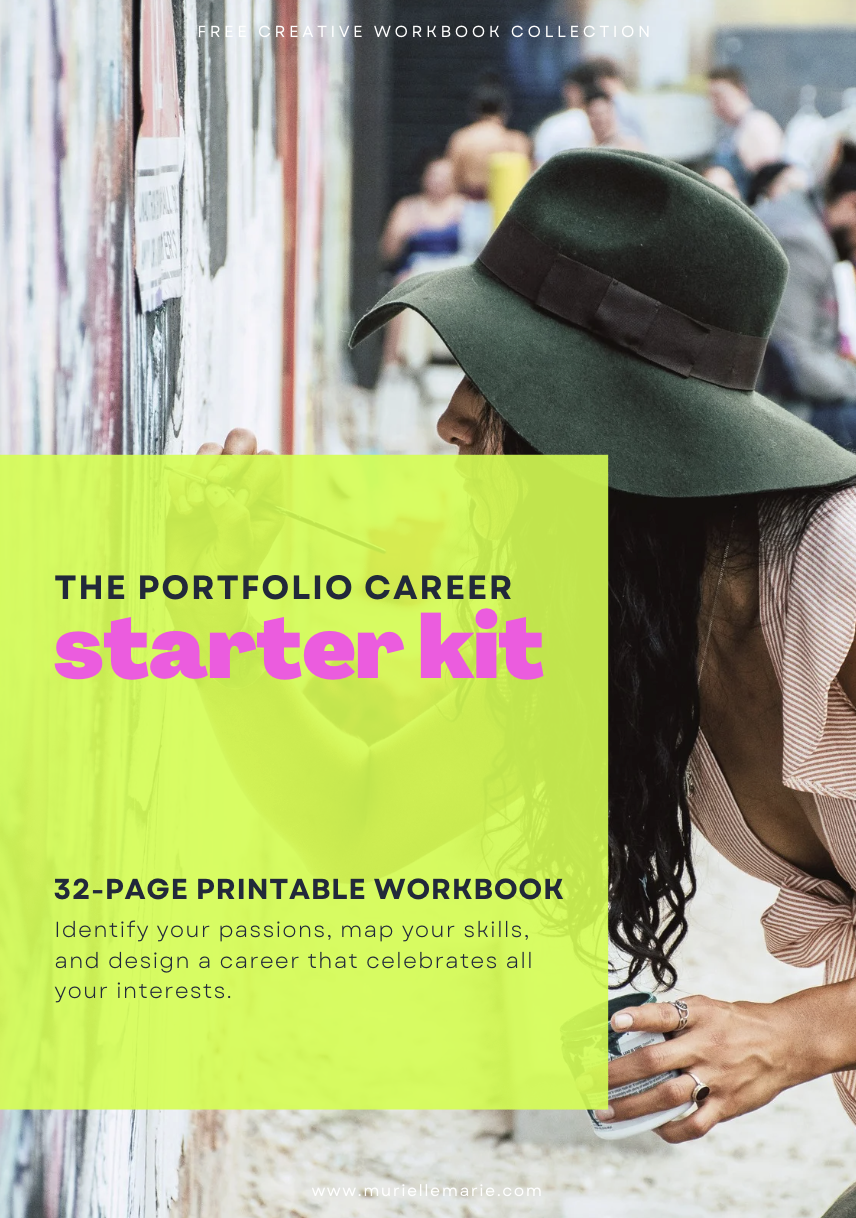
After working with multi-passionate professionals and creative generalists for a decade, I've identified 5 distinct portfolio career models. Each offers a different approach to structuring your time, managing your energy, and building financial stability for entrepreneurs and multi-passionate creatives looking for career clarity and freedom.
Let's explore each model so you can find the one that fits your life right now.
Model 1: The Main & Sides
One central income source + several smaller creative projects
This is the most common starting point for portfolio careers. You maintain one primary job or client (your "main") that provides financial stability, while developing smaller projects (your "sides") that add variety and supplemental income.
Who it's for:
People who value security but crave creative expression. Perfect if you have financial obligations requiring a steady income, or if you're just beginning your generalist or multi-passionate creative journey as an entrepreneur. If you’ve been searching for career coaching for multi-passionate creatives and want a model that supports your many talents, this is a powerful place to start.
What it looks like:
Sarah works full-time as a marketing manager (her main). On the side, she blogs about sustainable living, sells pottery at local markets, and occasionally consults on social media strategy.
Time commitment:
Your main job dictates most of your schedule. You fit side projects into evenings, weekends, or dedicated days off.
Income timeline:
Main provides immediate income. Sides can take 6-12 months to become profitable, but there's no pressure for them to be major earners.
First steps:
Secure or optimize your main income source. Choose ONE side project to develop first (you're not choosing for forever, just for right now). Block out 3-5 hours weekly dedicated solely to that project.
Model 2: The Equal Parts
2-3 well-developed income streams contributing equally to your time and income
You're a true "slashie," designer/coach, developer/musician. Each of your income streams is a serious professional endeavor, not a hobby.
Who it's for:
People who thrive on variety and context-switching. You have multiple skills you want to actively pursue, and you're excellent at juggling.
What it looks like:
David splits his week between freelance UX design contracts, co-hosting a paid podcast for tech professionals, and running paid masterminds for junior designers.
Time commitment:
You control your own schedule completely. You might theme your days (Mondays for coaching, Tuesdays for design) or split days in half.
Income timeline:
Takes 1-2 years to establish multiple equally profitable streams. Often evolves from Main & Sides as a "side" grows into a second main.
First steps:
Identify your top 2-3 interests with the highest income potential. Build one for stability, then layer in the second. Create a clear marketing message connecting your "slashes."
Model 3: The Seasonal Rotation
Work shifts dramatically based on the time of year
Your professional life has distinct seasons. You might spend summer leading expeditions, fall and winter on web development projects, and spring at conferences or on sabbatical.
Who it's for:
People who love deep, immersive focus and hate context-switching. Ideal for work tied to seasons (tourism, agriculture, tax prep) or for those who want project-based living.
What it looks like:
From May to September, Chloe runs a B&B in a tourist town. From October to April, she works remotely as a bookkeeper for creative businesses.
Time commitment:
You manage energy in sprints and rests. Intense focus for a period, followed by intentional downtime. Your year is planned in months or quarters, not weeks.
Income timeline:
Cyclical and often lumpy. You might make 80% of your annual income in 6 months. Requires disciplined financial planning and saving during "off" seasons.
First steps:
Identify 2-3 types of work with opposing high seasons. Analyze your annual budget to understand the minimum earnings needed during your "on" season.
Model 4: The Passion + Good Enough Job
A stable, job funds your purpose-driven passion project
One reliable job or business pays your bills (the "good enough job"), providing financial and psychological safety to pursue work you love deeply, but that isn't (or may never be) profitable.
Who it's for:
Artists, writers, researchers, nonprofit founders, or anyone whose primary calling has a difficult path to monetization. A pragmatic model that separates financial security from creative expression.
What it looks like:
Ben works as a data analyst for a stable tech company. The job is predictable and pays well, allowing him to spend evenings and weekends writing his first fantasy novel without worrying about sales.
Time commitment:
Demands fierce boundaries. The "good enough" job should ideally be one you can "leave at the office," freeing mental and emotional energy for your passion in off-hours.
Income timeline:
"Good enough" job provides immediate stable income. Passion project operates on an infinite timeline; it's allowed to grow organically without monetization pressure.
First steps:
Find or optimize a low-stress "good enough" job with clear boundaries. Formally schedule time for your passion project as if it were a paying client. Define success for your passion, independent of money.
Model 5: The Exit Plan
Build multiple businesses as assets to eventually sell
The serial entrepreneur's path. You're building businesses with the intention of growing them to sellable value, providing capital infusion for your next venture, or for financial freedom.
Who it's for:
Highly ambitious, risk-tolerant individuals motivated by entrepreneurship, growth, and scale. You think in systems, intellectual property, and market opportunities.
What it looks like:
Murielle starts an AI coaching brand called CoachMila™ while developing an AI coaching app for individuals and companies. Her goal: grow the brand to $10M revenue and sell it, along with the app.
Time commitment:
Your life revolves around your ventures. You're ruthlessly focused on the highest-leverage activities that drive growth. Long hours, but ultimate schedule control.
Income timeline:
High-risk, high-reward. Often requires significant upfront investment with zero initial income. Timeline of 3-7 years before profitable exit.
First steps:
Deeply research your market to validate your business idea. Create a lean business plan and financial model. Look for entrepreneurial mentorship. Start with the smallest possible MVP to test the market before going all-in.
Which Model Is Right for You?
The truth? Your ideal model will likely shift throughout your career and life stages. Many people start with Main & Sides, evolve into Equal Parts, then eventually structure Exit Plans. Throughout my career, I've circled through pretty much all of them. And right now, I'm a mix of Main & Sides, Equal Parts, and Exit Plans.
The key is choosing the model that fits your current life situation, risk tolerance, and energy levels, not the one that sounds most impressive.
Your multiple interests aren't a problem to solve. They're your unique competitive advantage.
Start Building Your Portfolio Career Today
Imagine a career where you’re not forced to choose between your talents but can instead blend them into a fulfilling portfolio that grows with you. It’s time to harness your potential and design the professional life you deserve.
Don’t wait to create the career you’ve always envisioned, sign up for your free session now and take the first step to turn your passions into a powerful portfolio career.
Frequently Asked Questions About Portfolio Career Models
-
A portfolio career is a modern approach to work where you intentionally combine multiple income streams instead of relying on a single full-time job. It's not about juggling random side hustles, it's a thoughtfully designed collection of projects, roles, and ventures that together create a fulfilling and financially stable life. Portfolio careers are perfect for creative generalists who've been told to "pick one thing" but know they're wired differently.
-
This workbook is designed for multi-passionate professionals, creative generalists, and anyone who feels stuck trying to force their diverse interests into a narrow specialty. It's perfect if you've been told you're "all over the place," if you're considering a career change but don't know where to start, or if you're already juggling multiple projects but want a clearer strategy. Whether you're in your 20s exploring options or in your 40s ready for a major pivot, this guide will help you design a career that honors all your interests.
-
Plan to spend 60-90 minutes working through the initial exercises in one sitting. However, the Portfolio Career Starter Kit is designed as a living document you'll return to over time. The 90-day exploration plan will guide your next three months of experimentation, and many people revisit the workbook quarterly as their interests and goals evolve. You don't need to complete everything at once, start where you are and build momentum from there.
-
The workbook includes five comprehensive sections: (1) Interest Inventory exercises to map all your passions, (2) Skills Translation Matrix to identify your transferable skills, (3) Pattern Recognition tools to find your unique "glue," (4) detailed descriptions of the 5 Portfolio Career Models with a self-assessment quiz, and (5) a complete 90-Day Exploration Plan with weekly tracking templates. You'll also get reflection prompts, decision frameworks, and real examples throughout.
-
Absolutely not! One of the five models (The Main & Sides) is specifically designed for people who want to keep stable income while exploring side projects. Most people start building their portfolio career while employed, using evenings and weekends to test ideas and build momentum. The workbook helps you identify which model fits your current life situation, risk tolerance, and financial needs, no dramatic leaps required.
-
You'll get immediate access to the 32-page PDF workbook to download and print or fill out digitally. You'll also receive my weekly newsletter with practical tips for building your multi-passionate career (you can unsubscribe anytime). If you get stuck or want personalized guidance, you can book a free 30-minute career clarity call to discuss your next steps. The workbook is completely free with no strings attached, it's my way of supporting creative generalists who are tired of being told to pick just one thing.

Career Coaching for Creative Generalists: How to Get Unstuck and End the Overthinking Cycle
If you identify as a creative generalist, a t-shaped, multi-hyphenate, multi-passionate creative, or an ambitious doer, you know this frustrating cycle well: you’re full of ideas and capabilities, and still you feel so agonisinglystuck. Instead of building an inspiring career (or boldly pursuing that long-overdue career change), you’re caught in a loop of endless overthinking and anxiety.
This challenge is precisely why I became a coach, and why specialized career coaching for creatives navigating a career change is so effective. The goal is simple, but life-changing: to help you finally work on your goals instead of just thinking about them, especially if those goals include pivoting to a more fulfilling professional life.
The Creative Generalist’s Unique Mental Blocks
Creative generalists operate differently; they are the broad thinkers in a world that still values specialization. They have a non-linear, sometimes accidental career history (often called a portfolio career) and possess qualities like compassion, ambition, and an insatiable hunger for knowledge. However, these unique traits come with distinct internal conflicts that can make even the idea of a career change feel paralyzing.
1. The Burden of Idea Overload
Creative individuals and entrepreneurs are prone to overflow with ideas, projects, and passions. My clients commonly report having far too many ideas in a day, which can make things feel messy and shift their focus constantly - especially when contemplating a career change or branching into new fields.
This vast array of options leads to the paralyzing paradox of choice. When faced with a million-dollar business idea or a dream of a career change that involves yoga on the beach, the inability to choose can be overwhelming and make many creatives feel stuck. This is exacerbated by the fact that many creative generalists feel misunderstood, believing that their multi-passionate brain must fit into a "tiny box of specialization". I know, believe me, this used to be me.
2. The Overthinking Cycle
The root of feeling stuck often lies in trying to solve complex life and career change questions solely using your mind.
After doing this work for a decade, I know that my coaching clients frequently desire guidance because they are at a tricky point in their career and life, or feel like they have outgrown their current life. They believe that thinking harder will produce a solution, but this only results in overthinking and worrying about the right decision, which only makes them more anxious and stressed out.
As time passes, an initial burst of inspiration can lead to a vision that grows more elaborate and turns into a mountain. This makes the task of actually doing things increasingly daunting. The result? Endlessly overanalyzing every decision you could make, especially about career change, inevitably leading to frustration or burnout before you even start.
3. The Paralysis of the Inner Critic
The final block is often the internal mechanism designed to keep us "safe," our beloved inner critic. This voice instills self-doubt and constantly says that what we want "isn’t real" or that "we're not good enough".
This constant internal chatter contributes to procrastination and self-sabotage. When clients come to me, they often have repeatedly broken promises to themselves (a side effect of procrastination), and start to question if they're even capable of achieving their dreams, especially when it comes to a major career change. Furthermore, many creatives unconsciously talk themselves out of projects by looking for flaws in every idea. This flaw-finding is often fear (False Evidence Appearing Real), attempting to stop them from stepping out of their comfort zone.
The Career Coaching Solution: Moving from Thought to Action
The fundamental shift provided by career coaching, especially during a career change, is the understanding that you cannot think yourself into a new career or life; eventually, you must go out and do it. Clients come to me for coaching precisely because they want a strategic roadmap that guides them toward a fulfilling career and helps them gain clarity and confidence to make choices aligned with their desired career change.
1. Embracing Action to Achieve Clarity
The core truth for the creative generalist suffering from idea overload is simple: ambiguity never disappears by simply thinking through all your options. When faced with multitudinous possibilities, the only way forward is to break the overthinking cycle, especially around career change, by taking action.
Clarity Through Choosing: Clarity is not a prerequisite; it only appears when you pick something. Once you choose, even if it feels scary, you start experimenting with reality, which is how you learn whether you like an idea or not, or if a particular career change actually fits you.
Embracing the First Step: My clients often face the hurdle of not knowing where or how to get started. Coaching helps them define the one thing they will get started with right now. Not forever, just for right now. This could be a small, concrete step toward a career change. This action doesn’t need to be perfect or permanent; if you don’t like it, you get to change your mind.
2. The Power of Mindset and Rewiring the Brain
Coaching is an integrative process that addresses both external plans and internal belief systems. The first phase of my four-step MOVE method focuses on Mindset.
Mindset Dictates Behavior: Your mindset influences your behavior; it is the driving force behind what you do. Overcoming mental blocks is especially critical during a career change, and it requires understanding that you are not your thoughts. You have control over what you allow yourself to believe and act on.
Neuroplasticity and Change: To achieve different results, you must change your mind, literally. Coaching uses techniques to help clients disrupt the mental, physical, and emotional systems that keep them stuck when contemplating taking action. By uncovering unconscious stuff that is keeping us stuck, we can begin healing and move forward.
3. Cultivating Self-Leadership and Consistency
Getting unstuck, whether in your current job or during a career change, is an act of personal leadership. Leadership is never given; you have to take it for yourself. This means admitting you have a role in staying stuck and realizing nobody’s coming to pull you out.
Building Resilience: You must stop waiting to feel entirely ready or confident before starting, as this is precisely what led to stagnation. The solution is not heroic bursts of energy but little changes over time that can, even quietly, spark a deeply meaningful career change.
The Chain of Action: Consistency is key. I love the Seinfeld Strategy, it emphasizes setting a goal and marking off every day you work on it; the only rule is "not breaking the chain". Small steps repeated over time (the compound effect) will move you toward your desired career change and cultivate the resolve and grit necessary to separate dreamers from doers.
By moving into this action-taker mode, you can move from being trapped in your own thoughts to feeling unstuck, moving towards your goals, and gaining the self-assurance that you are finally on the right path - whether that’s a new creative project, a passion pursuit, or a career change that fits who you truly are.
You’ve got this!
Take the First Step Toward Clarity and Freedom
Are you ready to break free from the overwhelm and finally gain the clarity you’ve been searching for? Imagine having a personalized roadmap that embraces all your passions and guides you toward a career and lifestyle that feel authentic and fulfilling.
Discover your unique path with a one-on-one private session designed to help you uncover your “glue,” silence the inner critic, and transform your scattered ideas into a focused, actionable plan.
Frequently Asked Questions About Career Change for Creatives
-
If you’re feeling unfulfilled, stuck, or burnt out in your current role, it may be a sign that it’s time for a change. Listen to your inner voice - especially if you continually daydream about pursuing creative passions or feel a deep pull toward something more aligned with your interests. While there’s no perfect time, small, consistent steps can help you transition without feeling overwhelmed.
-
Fear is natural during major transitions, but it doesn’t have to paralyze you. Reframe failure as a learning opportunity and take comfort in the fact that your creative nature equips you with adaptability. Start with low-stakes experiments, such as freelancing or building a portfolio, so you can explore your new path before fully committing.
-
The key is to find what I call your ‘glue’ that ties your passions together. Look for overlap between your interests and skills, then identify how they can serve others or solve a problem. Think about which passion feels exciting but also sustainable over the long term, and remember - you can always evolve your approach as you grow.
-
Start by researching how others in your field make a living. Look for gaps in the market that align with your strengths. Experiment with offering services, selling products, or teaching what you know. Join creative communities for support and inspiration, and don’t be afraid to start small as you test the waters.
-
Not everyone will understand your path, and that’s okay. Protect your energy by sharing your plans only with those who support your vision. Use critiques as fuel to refine and improve, and remember that your unique perspective as a creative is a strength - not something to be dismissed.
-
Transition gradually by starting your new career as a side hustle or part-time pursuit while maintaining other income sources. Budget thoughtfully, reduce unnecessary expenses, and look into grants, crowdfunding, or part-time contracts if needed. Focus on small wins that build your confidence while helping you stay financially secure.

Escape the 9-to-5: How to Combine Your Many Passions into a Fulfilling Career (Without Choosing Just One!)
Why Specialization Isn’t the Only Way
Are you a multi-passionate, creative generalist who feels like you're constantly battling the world's insistence on specialization? Do you have a multitude of interests and talents, yet feel overwhelmed by thousands of ideas, always questioning which path to pursue? If you're tired of feeling "stuck" in a traditional 9-to-5 that drains your energy and kills your creativity, you're not alone. Many creative generalists struggle with the pressure to choose a single focus, fearing it will suck the life out of them. The good news is, you don't have to choose – you can learn to combine your passions into a thriving, fulfilling portfolio career.
Overcoming Overwhelm: Silencing Your Inner Critic and Finding Direction
From coaching creatives for a decade I've learned that the core challenge for many creative generalists is an internal conflict: they're passionate about many things and hate the idea of giving any of them up. This often leads to feeling overwhelmed by ideas and struggling with procrastination and mental blocks that prevent them from taking action. The inner critic often chimes in too, creating self-doubt and fear of not being good enough, or telling them that their dreams aren't real or possible. This can lead to a sense of being perpetually stuck or feeling like you keep looking in the wrong place.
Furthermore, many clients express a lack of clarity and direction when it comes to their career path or business ideas. They might be at a tricky point or crossroads in their life and career, wishing for financial independence and a business they love, but struggling to balance these big dreams with the demands of daily life.
The good news is that your multiple interests are a superpower. Your unique generalist brain operates differently from specialists, and understanding this is your first step out of the 9-to-5 trap.
Actionable Tips for Multi-Passionates: Build a Portfolio Career Without Losing Yourself
Here are some tips to help you navigate your multi-passionate journey:
Understand Your Generalist Brain: Accept that your brain naturally wants variety and connection, unlike a specialist's. This is an asset, not a flaw. You don't have to conform to the norm of picking "one thing".
Embrace the "Puzzle" of Your Passions: Instead of feeling scattered, view your interests as pieces of a unique puzzle waiting to be combined. The goal isn't to eliminate interests, but to weave them into a cohesive whole that makes sense for you. This can lead to a career or business that really lights you up every morning.
Silence Your Inner Critic: That voice telling you you're not good enough or that it won't work out is often just trying to keep you safe from perceived harm or judgment. Learn to question your thoughts and regain control over your mind.
Aim for Clarity, Not Certainty: Many wait for absolute certainty before taking action, but waiting to feel ready or confident enough is often what keeps you stuck. Focus on identifying what truly matters to you and what direction feels right, even if the entire path isn't perfectly clear.
Take Small, Consistent Steps: Overcoming procrastination isn't about grand gestures but about consistent, small actions. This compound effect creates profound change over time and helps build momentum. Remember, action comes before the courage to act.
Align Your Environment with Your Goals: Your surroundings can either support or hinder your progress. Make conscious choices to create a physical and mental environment that nurtures your creative pursuits and minimizes distractions. This reduces reliance on willpower, which is a finite resource anyway.
Build Your "Glue": Identify the common thread, your unique "glue," that brings all your interests together and makes sense of your many passions. The clearer you are about this, the easier it becomes to choose what to focus on and make progress.
Through this approach, clients gain clarity and confidence, develop a strategic plan, and finally move forward and get unstuck to achieve their goals and create a truly fulfilling career and life.
The journey to a multi-passionate portfolio career is deeply personal, and often requires a different frame of mind and external guidance to find your unique answers.
Embrace your unique creative brain. You've got this!
Ready to stop feeling stuck and start combining your many passions into the fulfilling career you deserve?
In a safe and confidential space, we’ll dive into your desires and challenges, uncovering what truly drives you.
Together, we’ll craft a clear path that taps into your unique talents, helping you move from overthinking to action.
Schedule your free session today and take the first step towards your bold, wild, and free future!

Rediscovering the Excitement in Your Work: A Quick Guide for Bored-Out Creatives
Do you dread going to work in the morning? Do you feel less and less passionate about your job? Do you find yourself daydreaming about a different career path? Are you bored out of your mind just by thinking about your day ahead? If you answered 'yes' to any of these questions, this quick guide is for you.
As a creative person, I understand the struggle of feeling uninspired and unfulfilled at work, especially when you think your skills and talents are underutilized. This can lead to burnout, which can affect your productivity, mental health, and, even worse, sometimes bore-out.
What is bore-out? And are you suffering from it?
Bore-out is a state of chronic boredom and disengagement at work, which can be just as damaging, if not more, than burnout. Many of the creative generalists and entrepreneurial clients I coach suffer from it. It's characterized by a lack of motivation, boredom, and apathy toward work. Unlike burnout, where you may feel overwhelmed with too much work, bore-out stems from not having enough challenging tasks or opportunities to use your skills. This can result in a loss of meaning and purpose in your job.
If this sounds familiar, you might be experiencing bore-out. Of course, leaving your job for something more exciting is always an option. But perhaps you don't want to go because you love what you do and simply lost the spark.
When 'settling' becomes the norm
Sadly, for many people, work is something they endure rather than enjoy. Gradually accepting boring jobs is a silent killer of professional dreams. But why do so many people let this happen? The golden cage, of course, but also the fear of change, a desire for financial stability, or simply not knowing what you want can keep you stuck in the status quo.
The problem with staying in a job that bores the living life out of you is that it has a ripple effect. It impacts your career, mental health, and personal relationships. In my practice, this is often a sign that my client's professional life needs a radical shift - or a career redesign.
The problem is, how do you find inspiration again when you're bored out of your mind? How do you avoid falling into the same trap in the future?
Understanding the spark you've lost
Before I share a few tips with you on rediscovering work excitement, it's essential to understand the reasons behind job bore-out. These can stem from various issues, such as:
Monotony: When your job doesn’t challenge you, and the tasks are repetitive and not complex enough, it’s easy to become disinterested.
Mismatch of skills: If you feel that your talents or skills aren’t being utilized, this can lead to a sense of your capabilities being underutilized, which in turn causes you to feel unfulfilled and bored.
Lack of autonomy: When you don’t have control over your work or decision-making, it can make you feel like you’re not contributing to anything meaningful. This lack of agency can lead to feeling disengaged and uninspired.
Lack of growth opportunities: Without clear paths for career advancement or learning new skills, you may feel stuck in a dead-end job. This can lead to a lack of motivation and interest in your work.
There are more reasons to feel bored at work, but these are some of the more important ones. Now that you understand some of the causes let’s explore a few ways to reconnect with our work and find joy in it again.
How do you rediscover the excitement in your work?
To escape the bore-out cycle without having to quit your job, here are a few tips to help you rekindle your passion and creativity:
Identify the root cause: The first step in overcoming bore-out is understanding why you feel this way. This is usually a long and reflective step when I work with clients. Is it because of a lack of challenging tasks? Are you not using your skills to their full potential? Do you feel like your talents are being wasted? Is your manager not providing enough guidance or support? Once you identify the root cause, finding a solution will be easier.
Set new challenges for yourself: If your job has become too routine and mundane, try setting new challenges yourself. This could be taking on new projects, learning new skills, or volunteering for tasks outside your usual responsibilities. You can do this by yourself or include your colleagues or manager. This will not only make your work more interesting, but it can also help you develop new skills and grow professionally.
Take breaks and disconnect: Being constantly connected to work can lead to burnout or boredom. Taking breaks throughout the day and completely disconnecting from work during your off-hours is essential. This allows your mind to rest and recharge, leading to increased creativity and productivity when you get back to work. Set boundaries and stick to them, even if it means saying "no" to extra work or checking emails during off-hours.
Find meaning in your work: People become bored with their jobs because they don't see the purpose or impact of their work. This is also one of the main reasons people lose motivation. To counter this, try to find meaning in your job by connecting it to a larger goal or purpose. Understand how your role contributes to the well-being of others and the company's mission and vision. Knowing that your work has an impact can help motivate you and make you feel more fulfilled.
Seek out new opportunities: If you've been in your current job for a while, it's natural to feel like you've hit a dead end. However, there are always opportunities for growth and advancement if you seek them out. This could be through networking events, professional development courses, or even applying for new positions within the company. Don't be afraid to step outside of your comfort zone and take on new challenges. It can help reignite your passion for your job and open up new career opportunities.
I help creatives and entrepreneurs get unstuck. This often means that with the work we do together, they transition into new and better careers. But the pursuit of an exciting career doesn't mean you have to quit your job. The path to fulfillment and professional success is not often linear, and change is rarely immediate. Figuring out what a great career is for you is an ongoing journey of self-discovery and growth.
By recognizing the reasons behind your work boredom, addressing your fears and blocks, and actively looking for renewed excitement, you can find joy and purpose in your work again. So keep going. And if you need help, I'm here for you!
Feeling stuck in a career that no longer excites you?
You're not alone. Many creatives and entrepreneurs are looking for a spark in their professional lives. That's why I offer a free coaching session for individuals just like you who are ready to break free from the monotony and rediscover what it means to be truly engaged and fulfilled in your work.
Don't settle for boredom. Explore your potential, redefine your path, and find a new spark in your career. This is your chance to get personalized guidance, gain clarity, and take the first step toward a job that not only pays the bills but excites and inspires you!