

Career & Business Coaching Blog for Creatives & Entrepreneurs.
Inspiration, guidance, and practical strategies for multi-passionate professionals who refuse to choose just one thing.

7 Best Planners to Achieve Your Goals
If you're ready to get organized and want to get closer to achieving your dreams this year, the right planner can help you do just that.
When I choose a planner, I look for several specific things, of which the major ones are: clear overviews for months, weeks, to-dos, and task lists, great paper quality, enough writing space, interesting prompts, and, most importantly of all, systems that help me to create and achieve really big goals!
Based on those criteria, I've put together a list of the 7 best planners to help you achieve your goals.
The Clever Fox Planner is an agenda, daily planner, gratitude journal, and goal-setting tool all rolled into one. That’s why I feel it deserves to be #1 on this list. According to its designers – a team of five passionate online entrepreneurs – this planner is the solution for anyone looking to boost productivity, hit their goals, and increase their happiness through self-development.
Vitaly, one of the creators of this unique planner, explains:
We are all about productivity and personal development, so we knew we needed a system to track our goals and to help us increase our performance (and overall quality of life). As true believers that pen and paper works wonders to program our subconscious mind, our quest lead us to paper planners.
Vitaly and his team tried out several productivity planners on the market, and although those were great, they knew something was missing. Either the planners were only for 3 or 6 months (while they wanted a 12-month planner), or the planner lacked key features (such as a habit tracker or a yearly goal focus section), or it did not have enough space for notes, to-dos, or goals. In the end, for lack of finding a planner that would 100% satisfy Vitaly and his team’s needs, they decided to create it for themselves. That’s how The Clever Fox Planner was born.
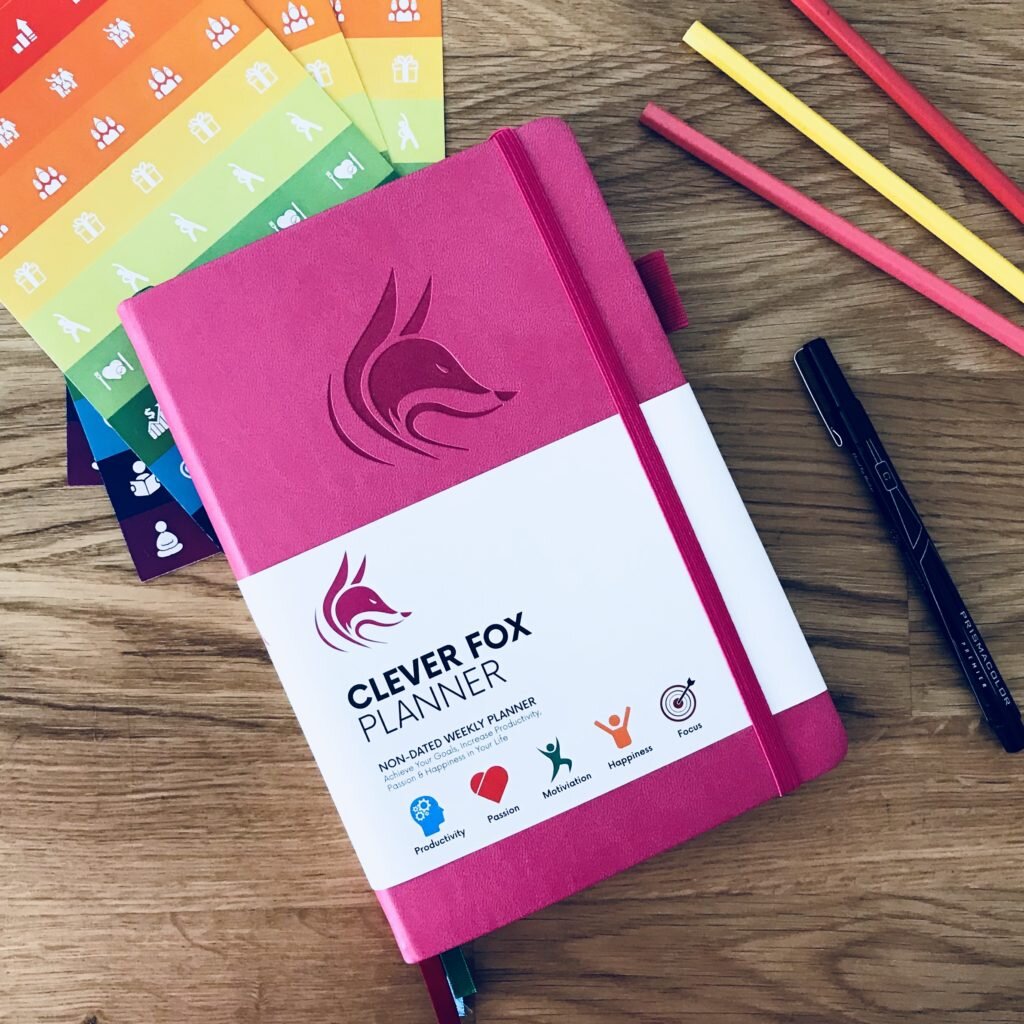
I love The Clever Fox Planner for many reasons. The most important ones are that you can start with this planner any day of the year thanks to its unmarked calendar, that each weekly overview comes with its own habit tracking section, to-do list, main goal and priorities overview, and room to reflect on your week’s wins and lessons learned.
At the beginning of the planner you’ll find a gratitude and self-awareness section, a page to add your daily rituals and affirmations, a double-sided spread to create a vision board. The planner also included a double spread for your life and business goals followed by an overview page to list your five most important goals of the year, and a mind map section.
I also have great news for bullet journal fans (and note takers like moi). The end of the planner has a large section of dotted pages. Perfect to bullet journal, keep notes, organize your thoughts, track ideas and so much more. A must-have for any planner lover if you ask me!
This structured planner is designed to help you navigate your passions, transform them into reachable goals, and define a roadmap to achieve them.
Founder and designer of the Passion Planner Angelia Trinidad says:
I wanted to help people overcome that feeling by making a tool that sat them down to clearly define their goals and dreams, break them down into more actionable steps, and then write them in a place that they would see and use everyday.
Angelina shares her story about the planner here.

I love the Passion Planner because it really delivers on its promise. It has super simple directions on how to use it and why, a monthly calendar view for each month (which I cannot live without!), and pages for reflections. The reflection section is what makes this planner really unique. And I love that on the right side there’s a blank area for you to get really creative – brain dump, draw, create a mind map, write notes. Anything you need to achieve your goals!
#3 Day Designer
The Day Designer is really a work of art. It’s beautiful, intuitive, and has so much space for everything! I like the classic look of this planner (how can you say no to a black, white, and gold combo?!)
Whitney English created this planner because she saw a void in organizational tools for fellow female entrepreneurs. You can check the Day Designer story here.
The first pages of the Day Designer offer different worksheets, each designed to help you find out your personal skills, values, vision, passions, and strengths. Yes, it’s very important to understand yourself in order to achieve your goals!
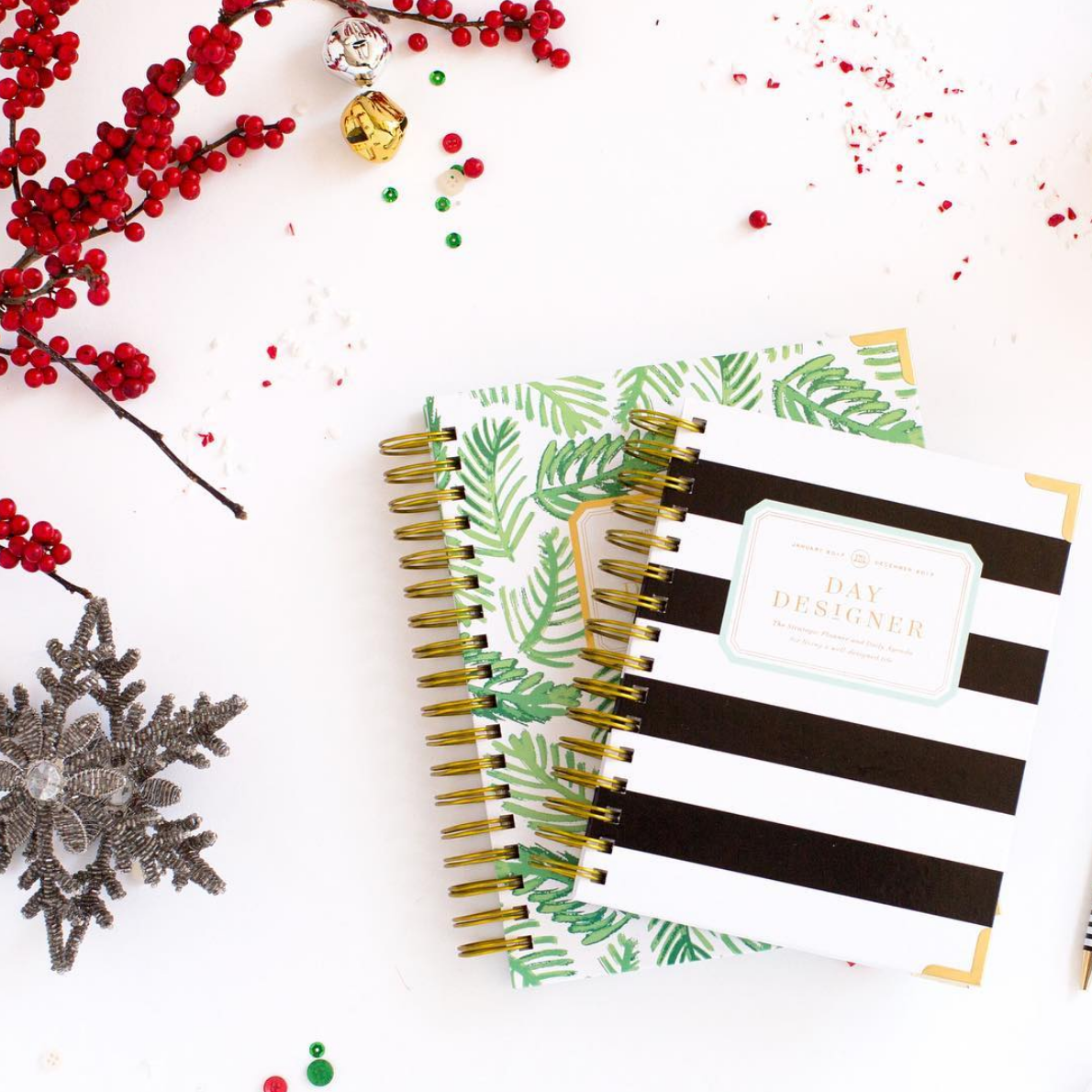
The planner gives each day a separate page, except for Saturday and Sunday, which share one page. Each weekday, Monday through Friday, has an hourly schedule from 5am to 9pm (great for early birds!), op 3 to-do prompts, a general to-do list (checklist), an inspiration quote, dinner planning, a spot to record daily gratitude, notes and more.
The Day Designer has a monthly calendar with beautiful tabs and daily pages for your appointments/meetings, a to-do list, and a section to remember your projects and deadlines. This planner is an extremely helpful tool to help organize all of your goals, ideas, tasks, thoughts, and even memories!
I love the Daily Greatness journals, and planners! They’re between Leonie Dawson’s workbooks, and more mainstream daily or monthly planners, and offer a well of incredible tools to gain clarity, work on your goals, and achieve more!
I particularly love the Business Planner, who has literally everything you need to be launch a new business, or elevate an existing one to the next level. It’s so good, that I recommend it to almost all of my business coaching clients!
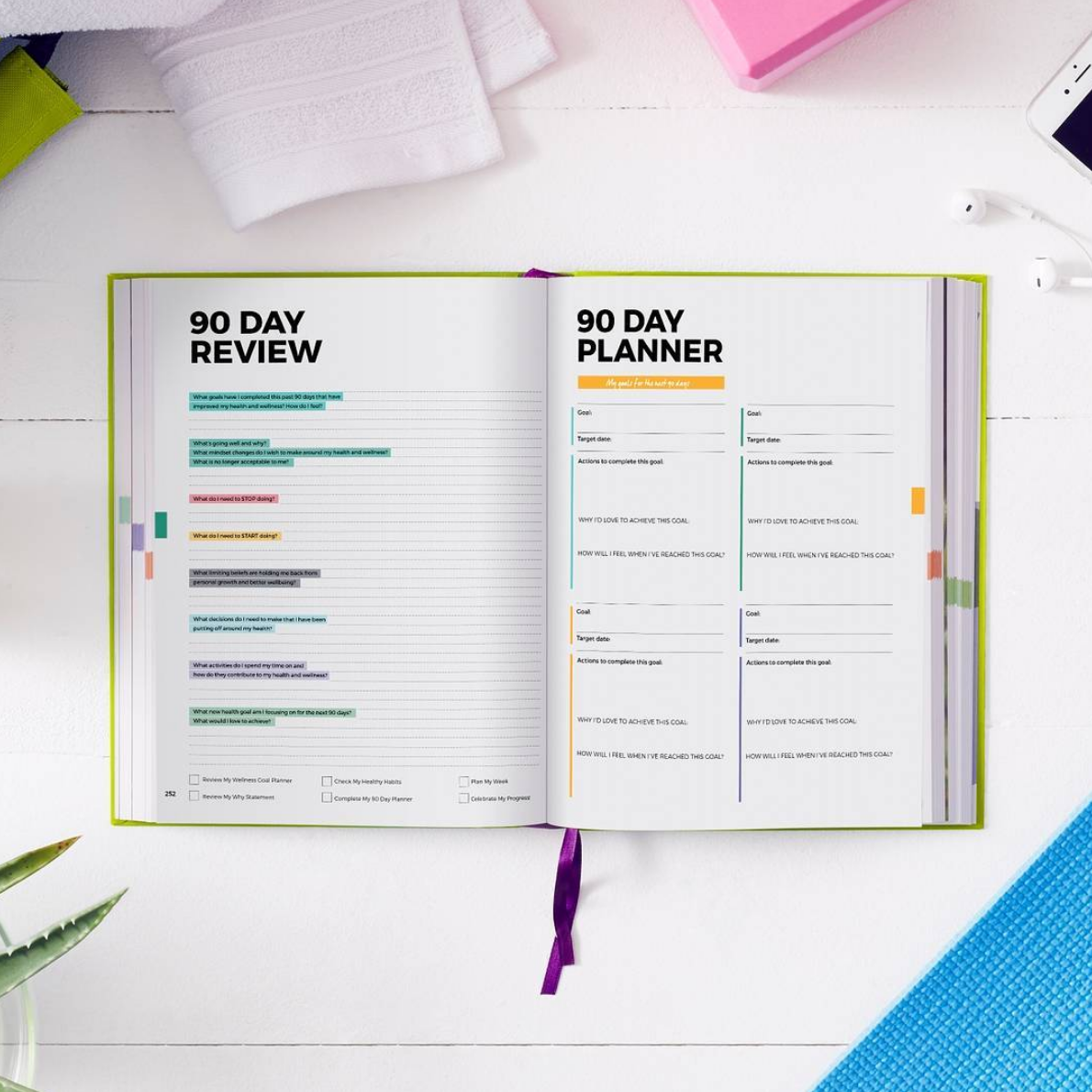
This year, Daily Greatness came out with a new Yoga Journal, and Parents Journal. Absolutely worth checking out if you’re looking for more structure in your life, business or both.
#5 Inkwell Press LiveWell Planner
The Inkwell Press Livewell Planner is an absolutely delightful planner. My favorite part of this planner is the focus on goal setting and productivity. At the beginning of the planner, there‘s a section for planning your yearly goals. Every month has a mission board for setting new goals in areas such as Personal Goals, House Plans, and Health and Fitness. Each month also comes with note pages, and you can reflect on the past month and plan for the next.

There are also some fun features at the back of the planner: a gift list, travel records, a books and/or movies list, a monthly bill tracker, and a section where you can record important dates (birthdays, anniversaries, etc.).
The Inkwell Livewell Planner is a colorful, playful, and very feminine planner.
#6 Danielle LaPorte’s Desire Map Planner
Danielle LaPorte’s Desire Map Planner not only helps you plan your to-do list, but also inspires you to feel the way you want to feel. This is soulful planning at its best, and a core piece of setting goals successfully!

The Planner was created by Danielle LaPorte. Here’s what she says about the planner:
I’m going to say something a bit audacious and salesy-sounding. Here goes: The Evergreen Desire Map Day Planner could totally uplift your life. Because being mindful, reflective, honest, optimistic, on time, and at least a bit organized — is a daily deal. The inspired and “together” life you dream of has got to have practical applications. This is it. A Day Planner that incorporates your soul and your to-do list; your core desired feelings and your goals; your gratitude and your plans for change.
The Desire Map Planner leads you to focus on your soul, life, and goals. The planner will help you to keep track of small and large intentions in your personal and professional life, take better care of yourself, focus on your mindset, creative ideas, and feel grateful throughout 2017!
Are you looking for a planner that can do it all?
Erin Condren Life Planner is full of tools you can use to plan your year. This planner is created to help you set goals, figure out what you truly want and take charge of your life.
What makes the Erin Condren Life Planner (even more) awesome is that you can totally customize your planner to make it unique:
You can choose between a neutral or colorful interior. You can pick a cover, or interchange them by purchasing different beautiful laminated ones and change them depending on your mood.
You can decide between different weekly layouts ( vertical / horizontal / hourly) and 12 or 18 month options. Every new month has a beautiful internal cover page with inspiring words.
Once you open the planner, you’ll see the year-at-a-glance pages. There are 12 boxes that are perfect for writing (and keeping track of!) your monthly goals.

An entire week is spread across two pages (from Monday to Sunday) and each day features a lined section. After all of the monthly/weekly spreads in the planner, you will find the notes section.
You will also get two pages with stickers (birthday, vacation, days off, and so on). Another feature is the Perpetual Calendar where you can write down all important dates, and it’s really great because you can take it from planner to planner.
All of this makes the Erin Condren planner very easy to use, super functional, and absolutely beautiful and unique at the same time!
Whichever planner you land on, the real key is building a consistent habit around it. If you want to start there, grab our free Work Habits Tracker — a lightweight way to build the habit before you commit to a full planner system.
Frequently Asked Questions About Goal Planners
What is the best planner for multiple goals?
The best planner for multiple goals is one that offers flexibility and separate tracking systems. For creative generalists managing multiple projects, I recommend the Clever Fox Planner or Passion Planner because they include sections for different goal categories, habit tracking, and reflection space, allowing you to organize various interests without forcing them into a single rigid structure. A new favorite of mine is the Plum Planner, which offers so much customization that any creative or entrepreneur can find a version that fits them perfectly.
How do I choose I goal planner?
Choose a goal planner based on your planning style and needs. Look for clear monthly and weekly overviews, enough writing space, quality paper, and most importantly, systems that help you break big goals into actionable steps. If you're a multi-passionate person, prioritize planners with flexible layouts over rigid daily schedules.
Do planners really help achieve goals?
Yes, research shows that writing down goals increases your likelihood of achieving them. Planners help by creating accountability, tracking progress, and keeping your goals visible. However, a planner alone won't create clarity; if you're unsure about your career direction, that requires deeper work than an organization can provide. A career coach like me can help. Schedule a free strategy session to explore how.

How to stop making excuses for yourself
I was talking to a friend last week about how hard it is for her to stay on track with her goals. She came to me desperate to find a schedule that would work for her, claiming she never has enough time to work on her goals.
But more than that, during our conversation I noticed how she kept making excuses for everything that she was unhappy about in her life: the way people treated her, the promotion she didn’t get, the neighborhood she was living in, the bills that kept on piling up. Pretty much everything in her life has nothing to do with her – or so she tells herself. What I told her is that it was time for her to stop making excuses for herself, and time for her to start achieving her goals instead.
We all love making excuses for ourselves
My friend is not alone in this. In fact, we all love to make excuses for ourselves. It’s our go-to habit when fear sets in, keeping it at bay comfortably by convincing ourselves that – although it’s not our fault – we simply cannot do, have, or achieve what it is we claim we so dearly want.
The reasons we rely on excuses may vary, but the results always remain the same: we don’t move forward with our lives, we don’t achieve our goals, we keep ourselves small.
Our excuses make it so easy for us to stay in our comfort zones
As I mentioned above, the reasons why we fall back on excuses may look different, but there is one thing almost all of them come down to: fear. When we start digging into the reasons why we love excuses to much, fear is almost always where we end up at:
Fear of failure
Fear of success
Fear of not being good enough
Fear of being made responsible
Fear of the unknown
Fear of making mistakes
Fear of change
Fear of (fill in the blank)
In my own life, I know I’ve kept myself small for so many years because of, well… all of the fears above, and more! I was even afraid to feel fear, and made a point out of avoiding anything that could make me feel uncomfortable. As a result, my comfort zone kept becoming smaller, and smaller, and smaller.
Until one day I realized that anything that remotely affected me with fear – things I had loved doing in the past, like going to amusement parks, or skiing, or even boarding a plane – had unconsciously made it from the fun list to the fear list.
Little by little I had shrunk my comfort zone to the point where it fit into my own pocket. I was devastated.
Our excuses and our fears love to work together
When I realized what I had done, and how much of the goals I wanted to achieve where unattainable for me considering where I was, I started to see a steady pattern between fear and excuses. I came to the conclusion that they love to work together!
Fear will ignite the excuse-o-meter, while our excuses are based on all the false ideas and beliefs we’ve gathered throughout our lives about what it is we can or cannot do. After a while – as I discovered through my own fears – this becomes a self-fulfilling prophecy: fears lead to excuses, and the more excuses you use the more fearful you become.
Overcoming your fears is the first step to stop making excuses
In order to break the cycle then, you need to work on overcoming your fears. Because the less fearful you are, the less you’ll hide behind excuses. If you don’t, you’ll not only keep yourself from achieving you full potential, and best life, you’ll also have a heap of other issues besides not achieving your goals:
You’ll start believing so many excuses that there won’t be any room left for creativity and risk in your life
You’ll reduce your comfort zone until it fits in your pocket
You’ll become self-centered, and probably very pessimistic
By relying on excuses you’ll reject taking responsibility for your own life, and actions
Eventually you’ll probably regret not having taken more chances in your life
Recognizing you’re making excuses is the first step to overcoming your fears
As with most things we do to ourselves, recognizing that we’re doing them is the first step toward change. With excuses it’s no different. But recognizing you’re making excuses for yourself can be difficult, and something that can meet a lot of resistance. With me, it’s definitely been the case. I kept myself small, and kept telling myself why things couldn’t be different, but I never questioned my beliefs.
My daily inner chatter, when thinking about the big dreams and goals I had for myself, would usually sound something like this:
I don’t have enough time to do it
I’ll be able to do it when…
I can’t do it, people will hate me if I do
I’ll never be able to make a living out of it
It’s not meant for me
Eventually I started noticing my inner talk. Then one night, when I was contemplating the big dreams I had for myself yet again, she said: you’ll never do it anyway. It was a defining moment in my life.
Redefining excuses as opportunities
That night, I made a list of all the things I had dreamed of doing but never actually done. Or started, but never finished. The list went on and on. Then I made a list of all the things I knew my parents dreamed of doing, but also never did. So I made a pact with myself, and decided to become the watch guard of my goals by noticing when I was making excuses, figuring out what my fears were, then redefining my excuses as opportunities instead:
#1 Ask yourself what kind of excuses you’re telling yourself
What am I telling myself so that I don’t have to do this or that?
What kept me from doing this or that?
I know I want to do this or that, so why am I not doing it?
#2 Identify what fears your excuses are expressing
What am I afraid of?
What do I think will happen if I do this or that?
What does fear look like for me?
#3 Redefine your excuses as opportunities
“I don’t have time” becomes “I have as much time as anyone else”
“I can’t do it, people will hate me if I do” becomes “What’s the worst that can happen?”
“I’ll be ready when” becomes “I’m ready now” or – my favorite – “I’ll never be ready, so I might as well do it now”
By redefining my excuses into opportunities, and always being on the lookout for the ways my fears love to express themselves to me, I’ve been able to overcome so much, and to make so many seemingly impossible things happen in my life.
That is what I want for you too. Don’t let your excuses stop you from achieving anything in your life.

Want to achieve your goals? Make sure they feed your soul
Every year I do the same thing. Come November, I start thinking about what goals I want to achieve in the following year. And from that moment on until early January, I dream big, and write down everything that my heart desires. And what I’ve learned doing this is that if you want to achieve your goals, you have to make sure they feed your soul.
To stay on track and in action I use a systematic action-setting, and goal-review system that I’ve worked out over the years. As part of that system, by this time of year each year, when we’ve passed the six-month mark into it, I do a thorough mid-year goal review.
And every year, no matter how well I’ve planned in advance, I catch myself doing the same thing again. Because every year, six months into working towards my goals, I always find the odd one or two in the list that don’t work for me. I’m talking about the ones that I haven’t worked on yet, or have been procrastinating on, or have been working on at first, only to find that I’m not able to keep it up.
Before I would really get upset, or feel guilty, or a failure for not addressing these goals properly, or from being so bad at working toward them. But what I’ve learned since my early goal-setting days, is to stop blaming myself and to start by asking one simple question instead: What will achieving this goal really do for me?
And it is powerful, I promise you. By asking yourself this question you’ll start listening to your soul, and learn to connect with your emotions. And when you want to achieve your goals, that’s really what you need to do. Jotting down things on a piece of paper, without wondering how those things make you feel, or why you really want to achieve them, really does not make sense. Yet, we all fall into the trap (sometimes). Even after years of goal-setting, I know I still do!
The question here, of course, is why that is. And the simple answer is, because we go about setting goals the wrong way.
Think of your new years’ resolutions, and what eventually makes it onto paper. It might look something like this:
Lose weight
Quit smoking
Get organized
Travel more
Read more
At first glance, there’s nothing wrong with this list. I’m sure that most of us want at least one or two of the things on it even. Still, there’s an issue. There is no purpose, no emotion, no feeling in a list like that. And without that, achieving goals is that much harder. Because in the end, the only reason why we ever really want to achieve anything, is to feel something, and to feed our soul. And that’s the reason why so many goals fail.
Now, that’s not to say that all goals you procrastinate on are orphan of purpose, absolutely not. There are many different reasons why we don’t achieve our goals, even the ones that really feed our souls. Absolutely. But if that’s not the case, if we don’t feel an emotional connection to what it is we’re trying to achieve, it will be really hard to do so. Or to sustain the effort.
Now that we’ve established that, I’d love for you to look at the example list above again. And ask yourself what you would feel if you where, let’s say, getting organized or reading more.
What would that bring you?
What would that change in your life?
What would the purpose be?
How would that feed your soul?
Getting organized might give you a sense of greater control over your life, or give you a greater sense of freedom. Reading more might be an activity you really enjoy, making your less stressed overall, enjoying things more. Or it might feed your insatiable appetite for knowledge.
The point is… those are your real goals: having a greater sense of freedom, enjoying things more, keeping a sharp and educated mind. And those are the goals that feed your soul.
The goal is almost always just a symptom of the real goal. And that’s were a lot of goals go wrong.
Losing weight is an even easier example. We never want to lose weight just for the sake of seeing the numbers on the scale go down. Ever. What we really want, when we say we need to lose weight – which is, by the way, the real goal we’re setting for ourselves – is always more personal, and more emotional. We want to lose weight because we want to feel sexy again, or because we want to feel wanted, or to feel healthier.
Notice the word feel in the last paragraph. That’s the essential word here. A goal should make us feel something, it should make our lives better, and make us happier. If it doesn’t, it doesn’t feed our soul. And if it doesn’t feed our soul, it’s going to be really hard to achieve. And by the way, why would you even try to begin with, if that were the case?
So if you find it hard to get started with a goal you set for yourself, or if you notice you keep procrastinating on it, I invite you to ask yourself what this goal really means to you, and how it feeds your soul. And if you find that it doesn’t, do like me when I find the odd one out: drop it, and move on.
Beautiful picture by Frederic Frognier – shotbyfred.com

How to get over impatience when setting or achieving goals
I was recently asked what I do to overcome impatience when I’m working on my goals or in the process of achieving them. Because keeping at it for a year – as I do and as I teach, encourage and guide my students to do in my goal-setting program – can certainly leave you feeling impatient at times.
The first thing that I want to address about this question is the concept of impatience. I consider myself to be a rather patient person, and yet, especially when my goals are concerned, that’s not always the side of me that shows up.
And what’s more, I know I am bound to experience impatience at one moment or another this year, and so are you. Just like we’ll all experience uncertainty, fear, insecurity, and perhaps even despair when it comes to achieving our most precious goals.
When you are actively designing your life – which is precisely what you do when you decide to set goals and work towards them – you will need reassurance sometimes that things will work out, and you’ll want things to move faster than they are – I can promise you that much.
Although we’re pretty good at delayed gratification, and although being able to wait for what it is that we want has been one of the key elements for our success as a species, sometimes we simply need to see the rewards of all of our hard work. And to see it now! But isn’t that normal? I mean, when you put a lot of time and effort into something, don’t you want to see results? Of course you do, delayed gratification or not!
So when it happens to you, don’t worry about it or be ashamed of it or to try and dismiss it. On the contrary, when you feel impatient, allow that emotion to exist and flow through you, so that it can pass. And once it does, get back to work.
The second thing I want you to consider is the many sources from which impatience can arise. It might be that the goal you are working towards is necessary for you to get out of a situation that you don’t to be in, like when you start a new business and you’re still working a day job until it’s profitable enough for you to quit.
Or it might be that impatience comes from the people around you, who don’t believe in you. And you want nothing more than to show those people how wrong they are, and how great you’re doing with your goals!
Or it might be that you have doubts and fears, and when results are not what you expect them to be, you start to worry.
In all these cases – and many more, I’m sure – impatience can set in. But when that happens, it’s important to remember the big picture: your end goal.
A great way to do this is to do a review of how far you’ve already come. The reason this helps is because, when we are looking to see results, we’re often so focused on the big stuff that we forget all the little steps we’ve taken already. A big result is often the end product of a long series of very small results. So make a list, recount all the things you’ve already achieved, and all that you’ve done, and remember that list or go back to it when you feel impatience creeping up on you.
Another thing you can do when impatience sets in is do something that you know will show immediate results. Be unreasonable with your goal for once, step away from your plan, and instead of taking another small step, take a bold one this time. This does not mean that you have to quit the day job, but perhaps there’s something that you can do for your goal that you know will have a big impact. Like when you’ve been contemplating to paint that room in your favorite color, but you’re still figuring out what that color is, exactly. Instead of focusing on color, why don’t you clean out the room and get it ready to be painted?
Or maybe there’s something you’ve been scared to do, or been thinking about but feel it’s too soon. Like sharing your big goal with someone, and telling them your vision so that they can dream of it with you. Whatever the case, I invite you to just do it. Calling in results like this will counteract your feelings of impatience – even if it’s not the end point of the goal itself, at least it will be an undeniable milestone that will bring your impatience to rest.
And, finally, it might be that you simply need a break. And maybe you have to do nothing for once, or sit in front of the TV and watch a movie for a while. Sometimes we need fresh air and a change of scenery for impatience to go away. Or we need to get it sidetracked by doing something entirely different. So if you know this is the case with you, take a rest and show yourself some love. After that, you’ll be less impatient and more energized, so that you can get working on your goals again.
But whatever the case, I choose to see impatience as a sign that I’m in action. And when I’m able to remember that, I feel good and proud, even when I have fears or doubts or when I’m not sure about my goals at all anymore.
Because by being in action, I’m the designer of my life, the captain of my ship, and despite impatience, I know I need that to be happy.
Ready to take action too? Why not start with a free 30-minute coaching session? I can’t wait to dream with you!